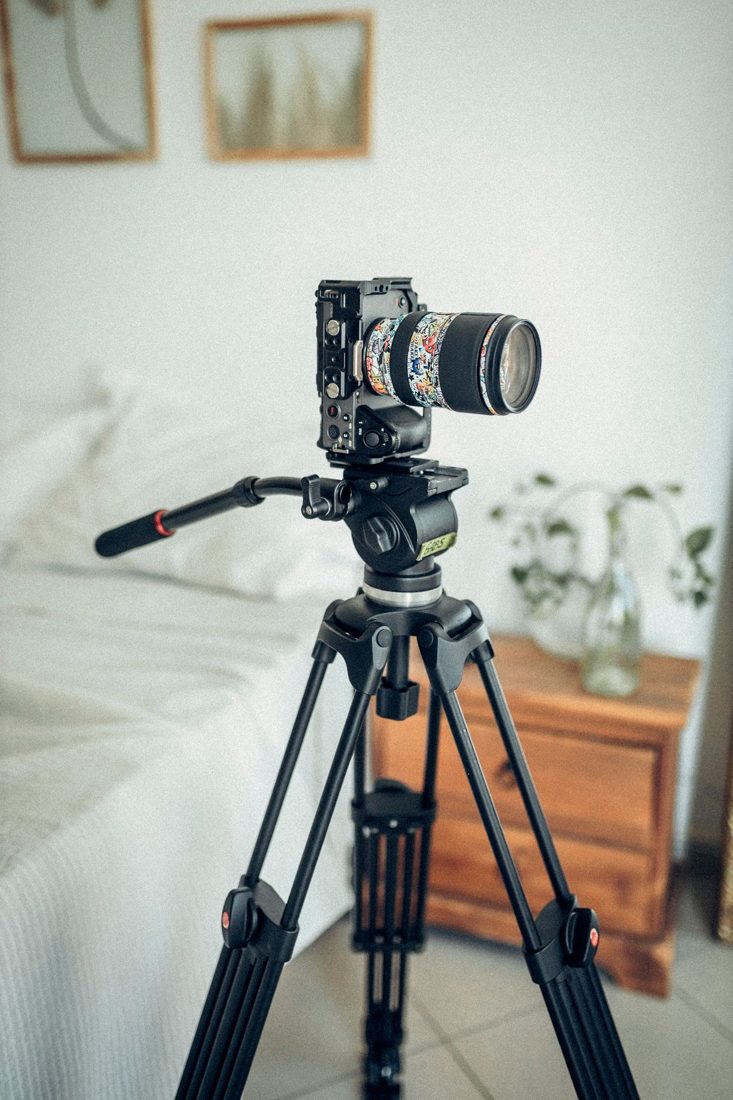
A tripod can fit neatly in a cupboard and still be awkward when its legs open beside a desk. Folded length is useful for storage, but filming depends on the space the support occupies while working. Measure the room and decide what the camera must do before comparing models. Include the lens and accessories, because the tripod supports the whole setup rather than the camera body alone.
Mark the intended camera position
Frame a test shot from the approximate height and distance you need. Then mark the available floor area around that position. Include space for the operator and any presenter movement. A tripod placed in the only route through the room creates a problem even if all three feet technically fit.
Compare the manufacturer’s working dimensions and leg-angle arrangements. Some configurations use less floor area but may not be intended for the same height or load. Do not force the legs into an improvised narrow stance. The support needs to be used in a configuration its instructions allow.
Count the complete load and movement
Add the camera, lens, microphone, light, and other items that will be attached. Check compatibility and load guidance for both legs and head. A stated load figure alone does not tell you how comfortably the head will control your particular arrangement, especially when accessories extend away from the camera.
For a static explanation, a simple securely locked composition may be enough. For a planned pan or tilt, try the head’s movement with a suitable load where possible. Check that handles can move without striking a wall, and that the quick-release system is secure and compatible with the camera mounting.
Check height and controls together
Set the camera at the intended working height and confirm that you can reach essential controls. Compare how much adjustment is available without relying on an awkward position. Follow the manufacturer’s instructions for the centre column and locks rather than assuming every extension is equally suitable for every load.
Finish with the practical details: access to battery and card doors, cable clearance, the ability to remove the camera, and storage after filming. A tabletop support may fit some shots, but it shares any movement of that surface and needs an appropriate mounting arrangement. Choose the support around the actual shot, then test a short recording before committing to a longer session.
Keep a note of the working height and footprint that suit the room. If borrowing or trying a tripod is possible, reproduce that arrangement before buying. The right compact choice is the one that supports the planned shot securely while leaving enough space to operate the camera and move normally.