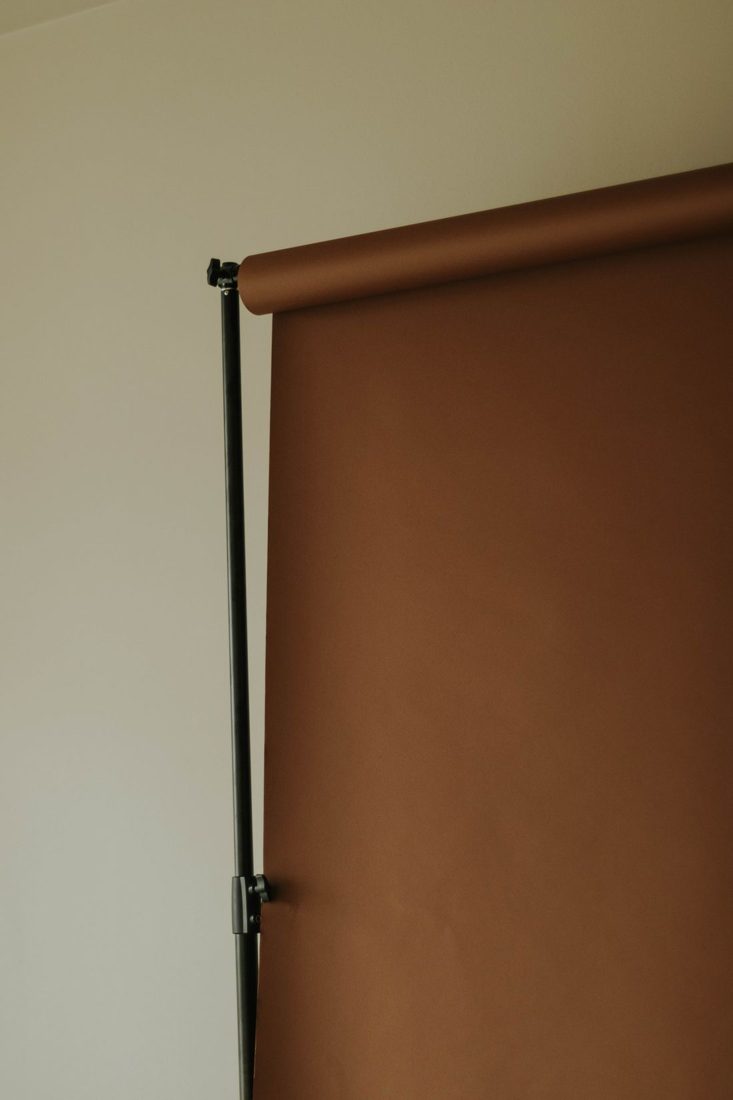
A backdrop that rolls into a bulky tube or stays permanently behind a desk can be inconvenient in a small room. A flat panel may suit compact product photographs, head-and-shoulders framing, or a defined filming corner, provided it is large enough for the view. Design it around the actual shot and storage space rather than buying the biggest sheet you can transport.
Measure the frame and storage opening
Set up the intended camera angle and identify the area the background must cover. Allow for normal subject movement and a little flexibility in framing. A panel that just reaches the corners of one still image may reveal its edges as soon as a presenter leans sideways.
Measure where the panel will be stored, including the route to that place. A flat sheet can still be awkward to move around a staircase or through a narrow door. If the needed filming area is larger than the available storage, consider a different camera framing or a commercially designed collapsible background rather than forcing a panel that cannot be handled conveniently.
Choose a surface for the subject
For a small tabletop station, a suitable rigid board may provide a simple, repeatable surface. Inspect it under the planned light for sheen, texture, and colour. A surface that looks plain to the eye may show bright reflections or visible patterning on camera.
If applying a finish, follow the material and finish manufacturers’ preparation, drying, and handling instructions. Test a small area first and allow it to be ready for use before bringing products into contact with it. Do not assume a decorative finish is appropriate for food contact or every object placed on the panel.
Support it without relying on balance
Use supports suitable for the panel’s size and weight. A tall board leaning loosely behind a presenter is not a finished setup. Keep edges and supports outside the frame without obstructing people. Rehearse the movements that will happen near it and check that a hand, cable, or chair cannot easily dislodge it.
Protect the working face between sessions
Store the panel as its material permits, keeping the photographable face away from abrasive objects and moisture. A clean protective separator may help prevent marks when several panels are kept together. Label the back with the intended surface and useful setup notes. Before another session, inspect for warping, scuffs, and dust under the recording light rather than discovering them in the final images.
Keep a reference photograph of the backdrop in use and note which subjects work well against it. Reusability depends on manageable setup and careful storage as much as appearance. A modest panel that returns reliably to the same condition is more useful than an impressive surface that is difficult to protect.