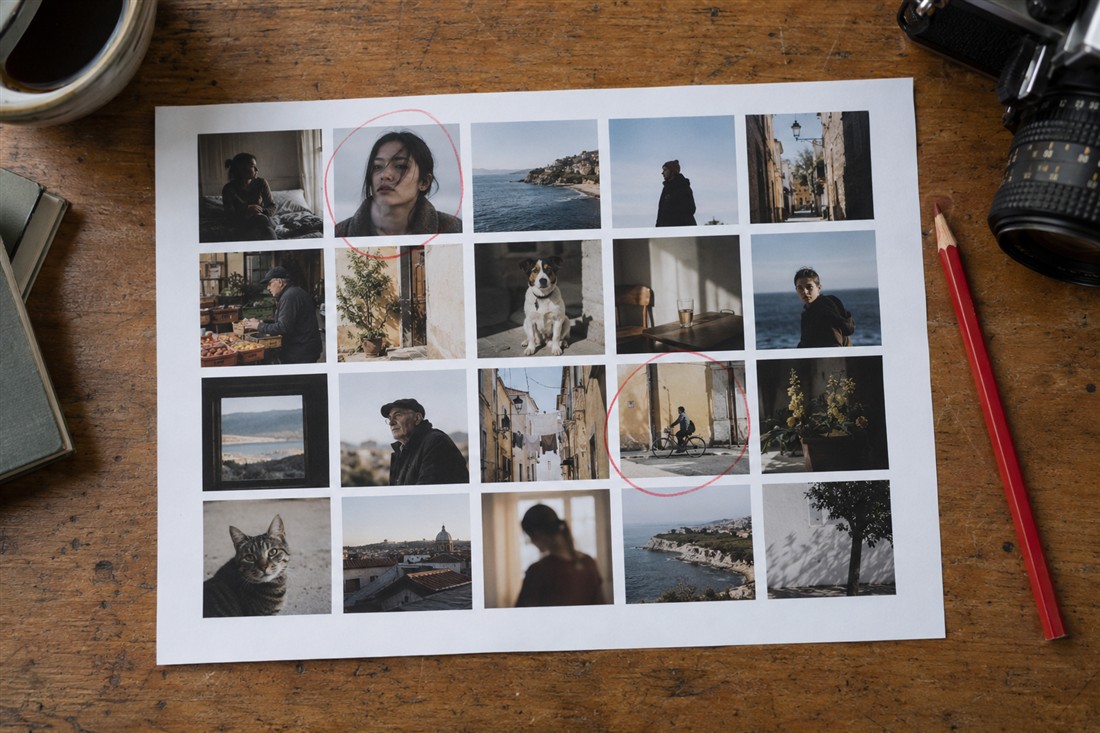
A contact sheet puts many photographs into a view you can scan without opening each file individually. It is useful for comparing expressions, spotting repeated frames and sharing an initial selection. The sheet should help you locate the original afterward, so the preview size and the labels matter as much as the arrangement.
Choose a meaningful group
Begin with photographs from one session or a clearly defined part of it. Mixing unrelated events into one sheet makes comparisons harder and can separate similar frames across too many pages.
Decide whether the sheet is for your own first pass or another person's review. A complete first pass can include near-duplicates; a shared selection may benefit from fewer candidates. Keep the originals in place and work from previews or a selection list rather than moving files merely to produce the sheet.
Use previews large enough to compare
Set a grid that makes the main subject readable at the viewing size you expect. A very dense page can reveal overall composition but may hide eye expression or a small product detail. Use fewer columns when those details are important.
Keep the thumbnails proportional so faces and objects are not distorted. A consistent cell size can accommodate both portrait and landscape frames with empty space around them. Avoid cropping every photograph to the same square if the original framing is part of the decision.
Make references unambiguous
Place a filename or short unique identifier beneath each preview. Ensure the label remains readable after exporting or printing. If two cameras have created the same filename, include a source label or another reference that distinguishes them.
Give the sheet a descriptive name and, when needed, a page number. Tell reviewers how to return selections, such as listing identifiers with a brief reason. Comments like the third one on the left become unreliable when someone views a different page or rearranges a window.
Use the sheet for selection, then inspect originals
Make the first pass for composition, expression and coverage. Mark a small group of promising photographs instead of attempting a final technical judgement from tiny previews. Similar frames can be grouped for a more focused comparison.
Open those originals at a useful magnification to check focus, movement and distracting details. If you create a revised contact sheet, name it distinctly and retain the selection references. The review should end with a clear list of original files, not only circles drawn on an image of the sheet.
Treat the contact sheet as an index and comparison tool. Clear labels, sensible grouping and readable previews make it effective. Final image quality still needs inspection in the original files before you edit or deliver the selection.