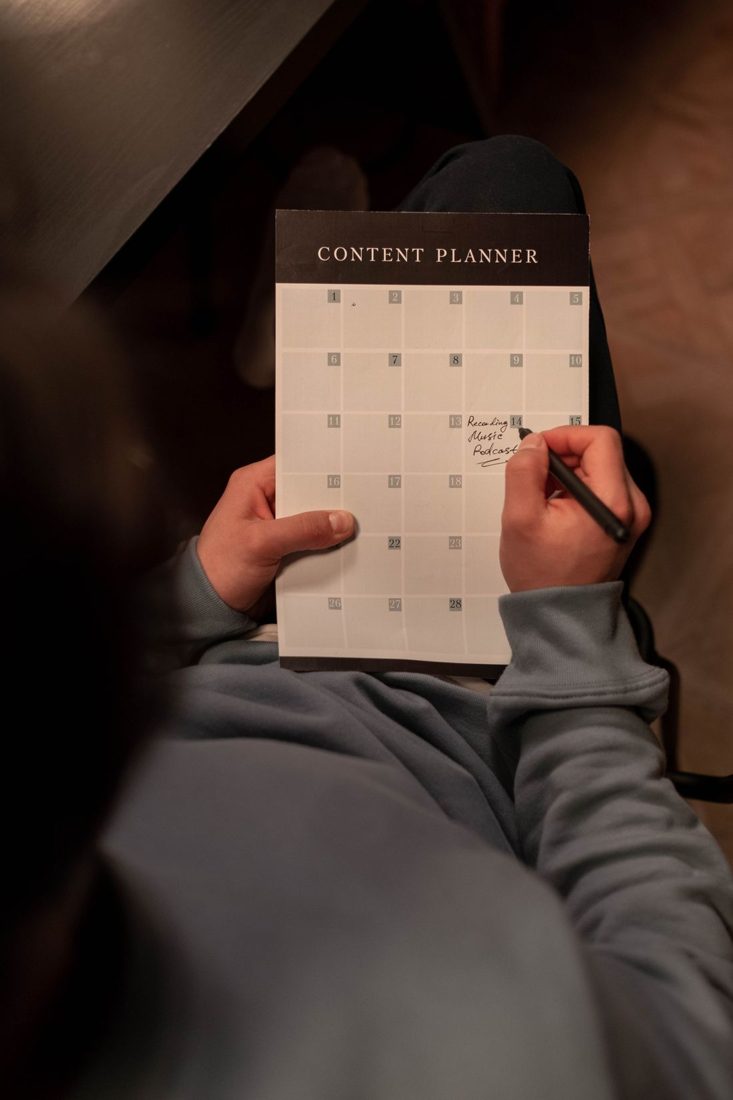
A publishing calendar can look achievable while hiding most of the work. A date labelled publish says little about finding images, recording a missing shot or checking a final export. For a one-person workflow, the calendar needs to reflect those tasks as well as the public release. Begin with available working time and commitments you can actually protect.
Measure one complete piece
Choose a recently finished article or video and reconstruct the main stages: research, outline, production, editing and checking. Use your notes or files to estimate the effort, including interruptions and revisions.
Do not turn the quickest example into the standard for every future piece. A familiar subject with existing photographs differs from a new tutorial requiring a location and demonstration. Mark the estimate as provisional and adjust it after completing a few more comparable pieces.
Reserve production time before release dates
Put the essential working sessions into the calendar first. If a video needs daylight, reserve the recording window before choosing its publication day. If an interview depends on another person's availability, keep that dependency visible.
Break substantial work into stages that fit your actual sessions. An evening may be enough to outline a tutorial but insufficient to record, edit and review it. Give unfinished work a clear next action so restarting does not consume the following session.
Leave room for ordinary disruption
Keep some capacity unassigned. A missing image, noisy recording or delayed answer should not immediately push every planned item into the next week. The amount of breathing room should reflect how uncertain your work usually is.
Maintain a small list of simpler pieces that are useful on their own. These can help when a larger project stalls, but avoid treating them as an obligation to publish continuously. Moving a release date can be more sensible than filling a gap with weak content.
Review the calendar as working evidence
At a regular planning session, compare completed work with the original estimates. Ask which stage repeatedly took longer and which topics remained blocked. Adjust the schedule or simplify the production method accordingly.
Keep only the detail you use: topic, current stage, next action, dependency and intended date may be enough. Separate a firm commitment from a tentative idea. A calendar filled with unconfirmed dates can make it harder to recognise the few deadlines that truly matter.
Choose a publishing rhythm that allows each piece to be prepared and checked. A realistic calendar supports the work between releases and can absorb ordinary delays. Its value is clearer decisions about time, not the appearance of a permanently full schedule.