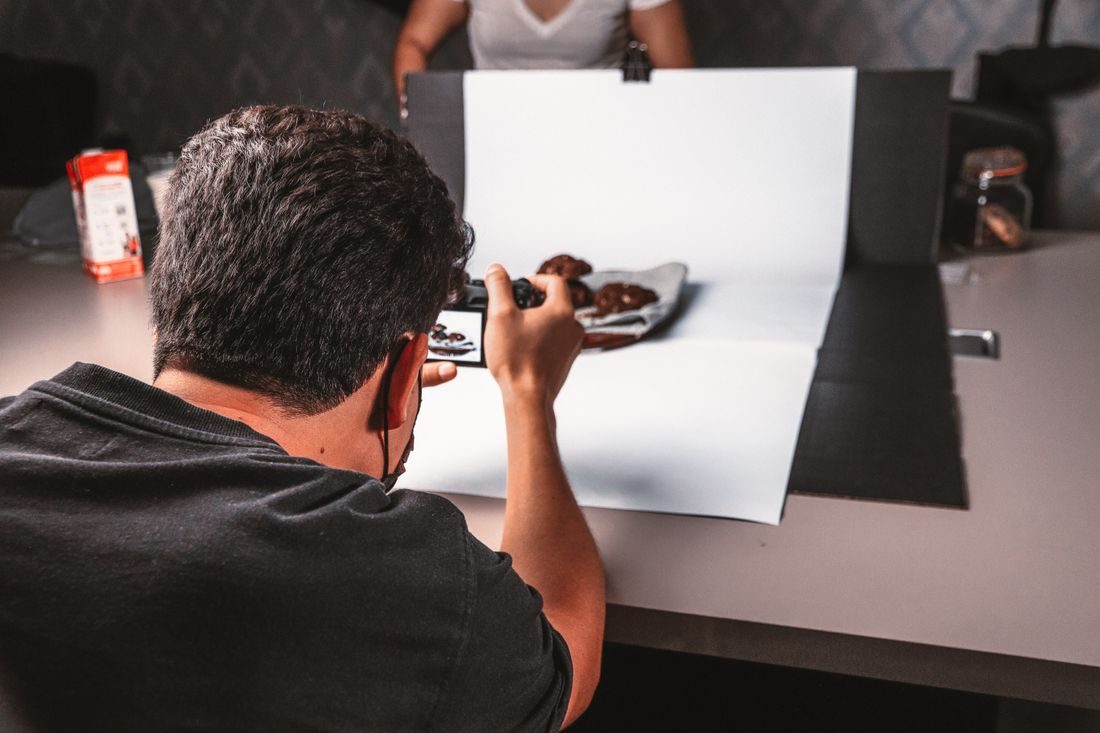
A tabletop station works best when it removes small decisions from each photograph. The surface, camera, and light remain predictable while you concentrate on the object. Begin with the products you actually need to photograph, including the largest and most reflective. A setup designed around one tiny matte object may be awkward for the next item in the same series.
Make room for the product and your hands
Choose a stable table with enough space for the object, background, and any reflector. Keep the edges clear so you can turn the product without knocking the camera support. Check the background through the lens; the camera sees a smaller, more specific arrangement than the whole room.
Clean the surface and the object using appropriate care methods. Remove packaging only when the photograph is intended to show the unpacked item. Keep removable parts together and avoid altering a product in a way that misrepresents what someone would receive or how it is used.
Choose a repeatable viewpoint
Frame the largest item first and decide how much space should surround it. Use a suitable support if the camera position needs to remain fixed. Mark positions only on surfaces where that is appropriate, or record measurements from the table edge. Keep the lens, height, and angle consistent when consistency is the purpose of the series.
For items of very different sizes, decide whether the images should preserve their relative scale or each fill the frame. Both can serve a purpose, but changing between them unintentionally makes a catalogue confusing. Add a clear secondary view when scale or detail needs explanation.
Control one useful light source
Try a suitable window position or a single compatible light before adding more fixtures. Inspect shadows and highlights on the actual product. A white card may lift a dark area; a reflective object may need a change in angle so the room is not prominent in its surface.
Take a test photograph and inspect focus, texture, and labels. Check that the background supports the product rather than hiding a pale edge or casting an unwanted colour. Save the exposure and white-balance approach used for the series, while allowing changes when a different material genuinely needs them.
Record the station before clearing it
Photograph the arrangement from above and from the camera side. Note the distances that matter, the light source, and any reflector position. Keep a reference product image with the notes. These records make it easier to add another item later without relying on a vague memory of where the table stood.
After the first few products, review the series together and correct inconsistencies before photographing everything else. A simple station earns its value through repeatability and clear product information. Keep the arrangement only as complicated as the objects require, with enough room to work carefully between shots.