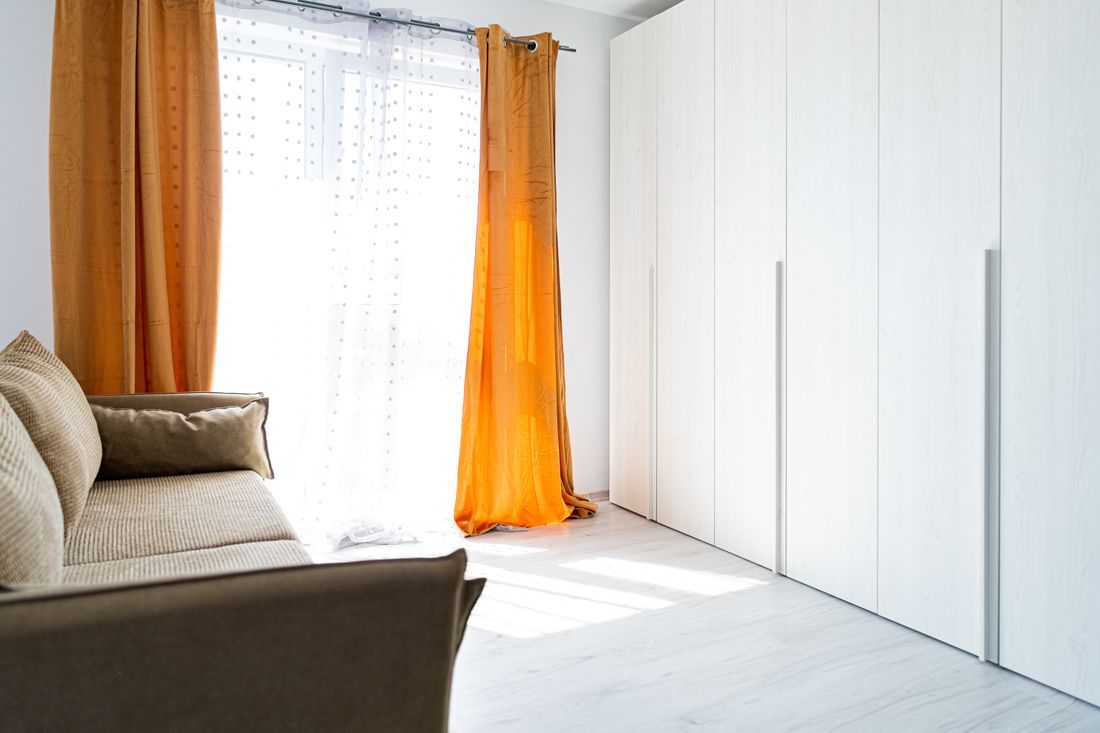
A bare room can make a spoken explanation sound more distant than expected. Existing curtains, upholstered furniture, and other soft surfaces may offer a useful starting point before you consider permanent acoustic treatment. Their effect depends on the room and where the speaker and microphone sit. Make a controlled comparison instead of assuming that adding more fabric anywhere will produce the sound you want.
Keep a clear reference recording
Record a short passage in the current arrangement, including a pause after the last word. Note the microphone position and use the same speaking distance for later samples. Listen for lingering reflections and the character of the voice, not only background noise.
Curtains and soft furnishings address some sound reflecting within the room; they do not automatically prevent traffic or neighbouring activity from entering. If external noise dominates, a different recording time or location may matter more. Identify that distinction before evaluating a change as successful or unsuccessful.
Change the useful surfaces deliberately
Close suitable existing curtains and repeat the recording. If movable upholstered furniture can be repositioned without disrupting the room, try a sensible arrangement and compare again. Keep the speaker comfortable and the microphone accessible rather than building a cramped enclosure solely because it contains soft material.
Shure’s recording guidance discusses absorption near the recording position as a way to reduce unwanted reflections. Treat that as a reason to experiment with placement, not a promise that a particular household object has a measured acoustic performance. Materials and rooms differ, and a small improvement may be enough for the intended explanation.
Keep improvised treatment practical
Use only securely supported material and leave doors, cables, and ventilation clear. Do not drape fabric over lights or equipment. In a shared room, agree any temporary arrangement and make it straightforward to remove afterwards. The recording corner still needs to function as a room people can enter and use.
Choose by the recorded comparison
Listen to the samples at comparable playback levels, ideally without watching which arrangement produced each one. Decide whether the voice is clearer and whether the change introduces an unwanted boxy quality. Keep the arrangement that helps and remove additions that achieve little. If you need more predictable performance across repeated sessions, the samples can help describe the problem when seeking appropriate acoustic advice or treatment.
Save a photograph and a short sample of the preferred arrangement. Recheck the sound if furniture, curtains, or microphone position changes. A useful household adjustment is one you can reproduce safely and hear in the recording, with its limitations understood before committing to a larger room makeover.