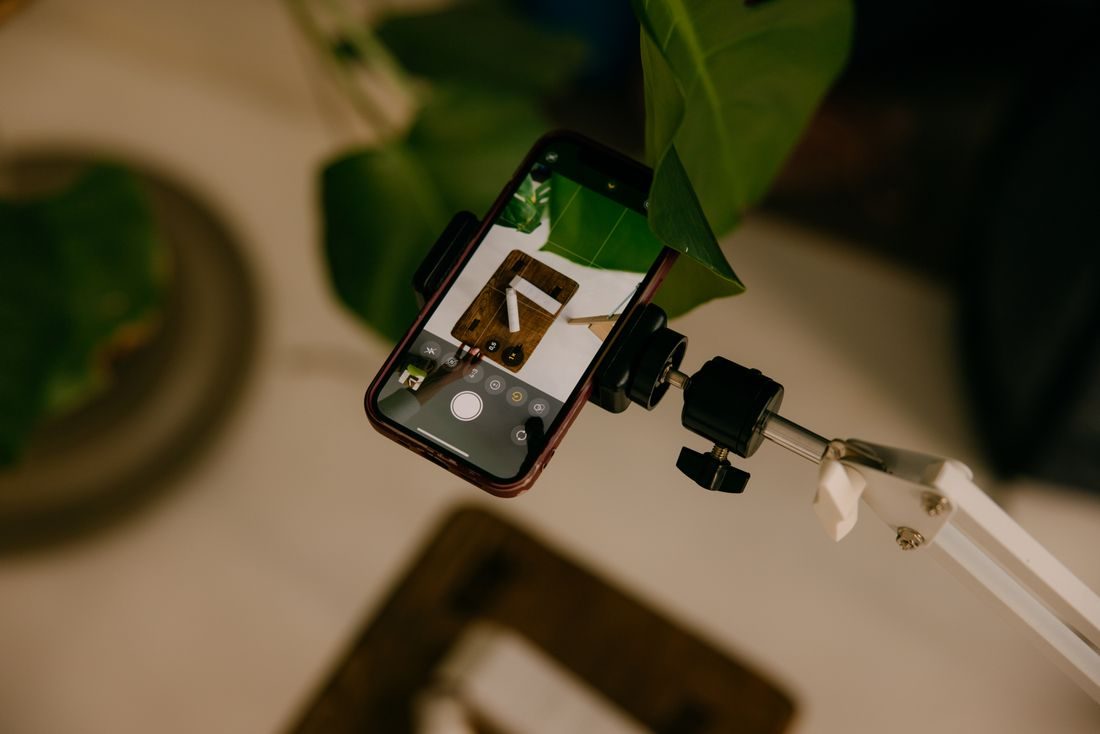
An overhead phone view can make a small demonstration easy to follow because the viewer sees the work surface directly. The setup also places equipment above the action, so improvised balancing is a poor foundation. Choose a mount designed for your phone and the intended orientation, then build the demonstration around a secure and repeatable arrangement.
Check the support before the frame
Read the mount’s instructions for device size, permitted load, clamp surface and arm position. Include any case or accessory in the load and fit assessment. A clamp that closes around a table edge is not automatically approved for that edge or an extended overhead arm. Use the specified support and fittings. If the instructions do not cover the proposed position, choose a suitable system rather than assuming a tight-looking connection is enough.
Frame an empty work area
Start with a clear table and no delicate objects underneath. Secure the phone as instructed and view the complete frame. Mark the area where your hands and materials can remain visible using a removable aid appropriate to the surface. Include room for the tallest object as well as the flat starting layout.
Keep the mount out of your normal reach and away from the motion of large tools. Arrange lighting and cables so they do not pull on the support or cross the working area.
Rehearse the movements at ordinary speed
Run through the demonstration without recording the final take. Watch whether an elbow touches the arm, the table moves or the frame drifts when you reach for materials. Inspect the support again if anything changes. Do not make the first trial over hot pans, liquids, sharp tools or valuable work. A setup suitable for paper folding may be entirely unsuitable for a task involving heat or force. Plan that task with appropriate equipment and space.
Record a test you can inspect
Make a short recording that includes the nearest and farthest hand positions. Play it back and check focus, shadows, text orientation and whether the main action stays inside the marked area. Set focus and exposure appropriately where your camera allows, then recheck after changes. Keep the phone’s charge and available storage sufficient so you do not need to adjust the mount mid-task. Stop the activity before touching or repositioning overhead equipment.
A clear overhead demonstration starts with a support intended for the job and a rehearsal that tests the full movement. Once the arrangement is stable, the composition becomes easier to refine. Keep the recording area simple and stop whenever you need to change the equipment rather than reaching around it during the action.