Interview height changes how the viewer relates to the speaker. A low camera may emphasise the chin and ceiling; an unnecessarily high one can make the person look as though they are addressing someone above them. Start with the actual sitting position, not the height at which an empty tripod happens to be standing.
Arrange the person before the tripod
Choose a chair the speaker can use comfortably for the length of the conversation. Ask them to sit as they normally would, then place the lens near their eye level as an initial view. Check the frame while they are seated rather than estimating from an empty chair.
Leave room for small shifts in posture. A framing that works only when someone holds their back rigidly can make the interview feel unnatural. If the chair swivels, discuss whether it will be easier to use a fixed seat or simply keep the movement modest.
Decide where the conversation is happening
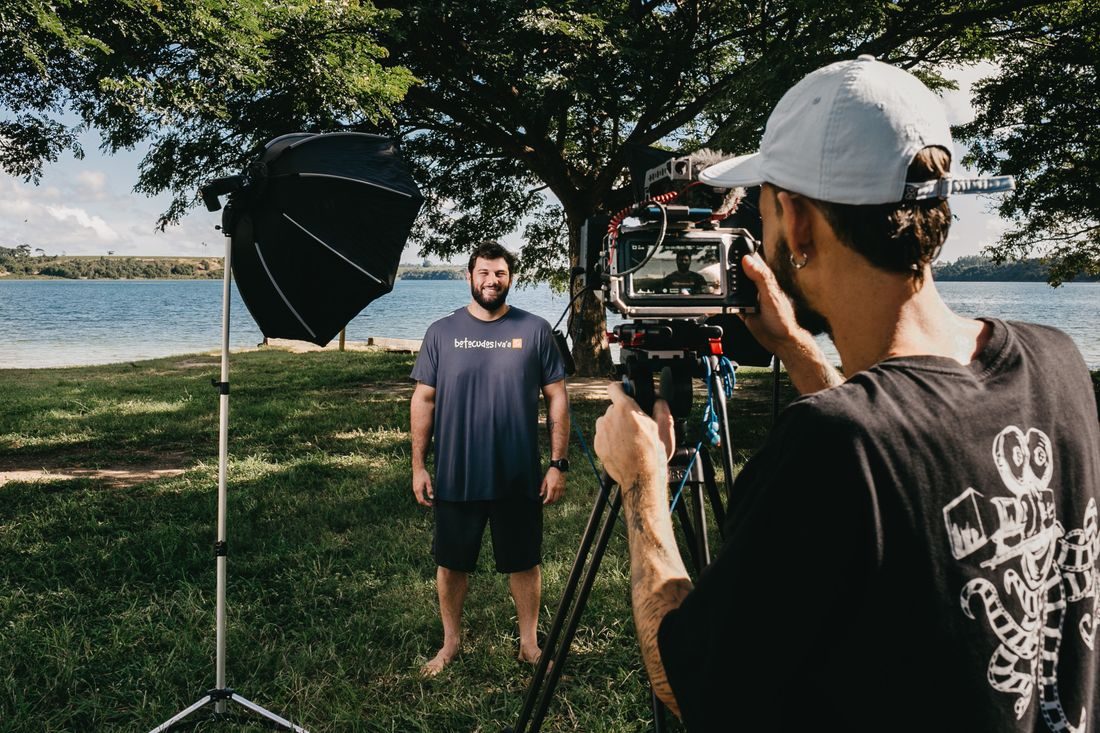
For a direct address, the speaker can look towards the lens. For a conversation with an off-camera interviewer, place that interviewer close enough to the camera that the resulting eyeline feels intentional. A person speaking far to one side may appear disconnected from the viewer.
Bring the interviewer to a comparable seated height if possible. Otherwise the speaker may repeatedly tilt their head up or down, undoing the effect of a carefully placed camera. Avoid moving the interviewer between answers unless you also reassess the framing.
Make a small adjustment and compare
Record a short answer at the starting height. Then raise or lower the lens a little and compare the face, shoulders and visible background. The right choice depends on the person and the tone of the piece; there is no single flattering measurement for every interview.
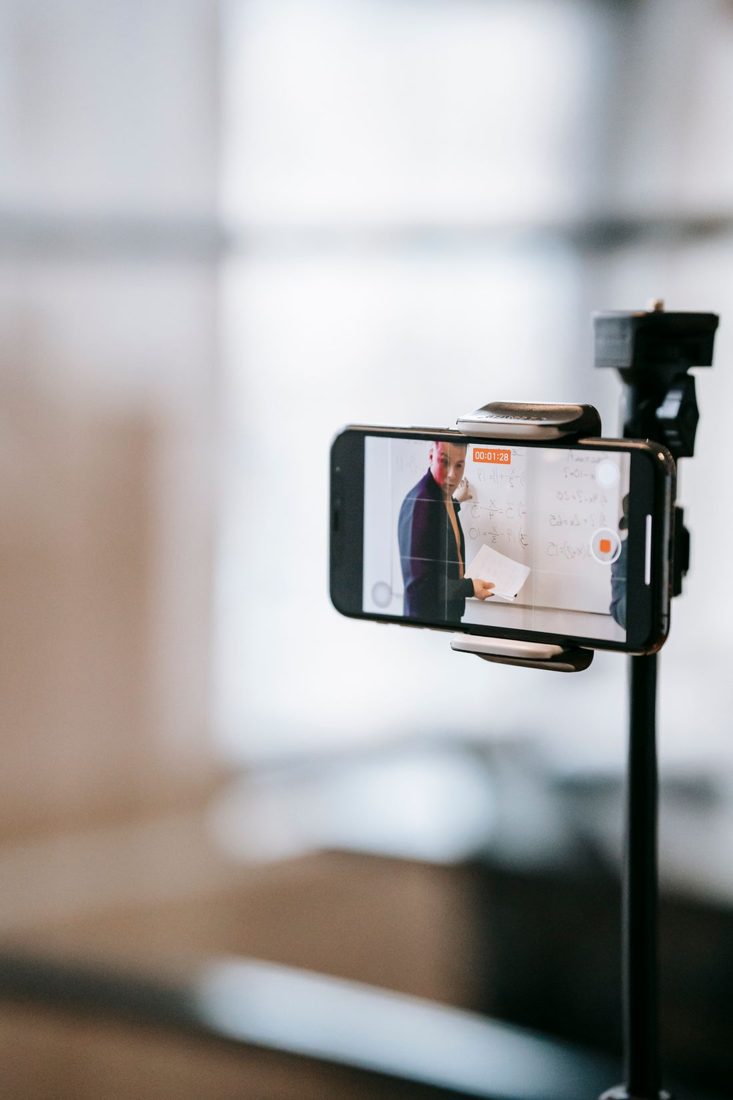
Keep camera distance and lens choice in mind as well. Moving an extremely close phone slightly higher will not address every distortion caused by proximity. If the face looks exaggerated, try a little more distance and a suitable framing before continuing with height adjustments.
Check the frame when the speaker moves
Ask the person to answer a natural question and watch how they lean, gesture and turn. Look for clipped hands, excessive space above the head or a background object becoming distracting as the head moves. Make the frame work for a conversation rather than a posed still image.
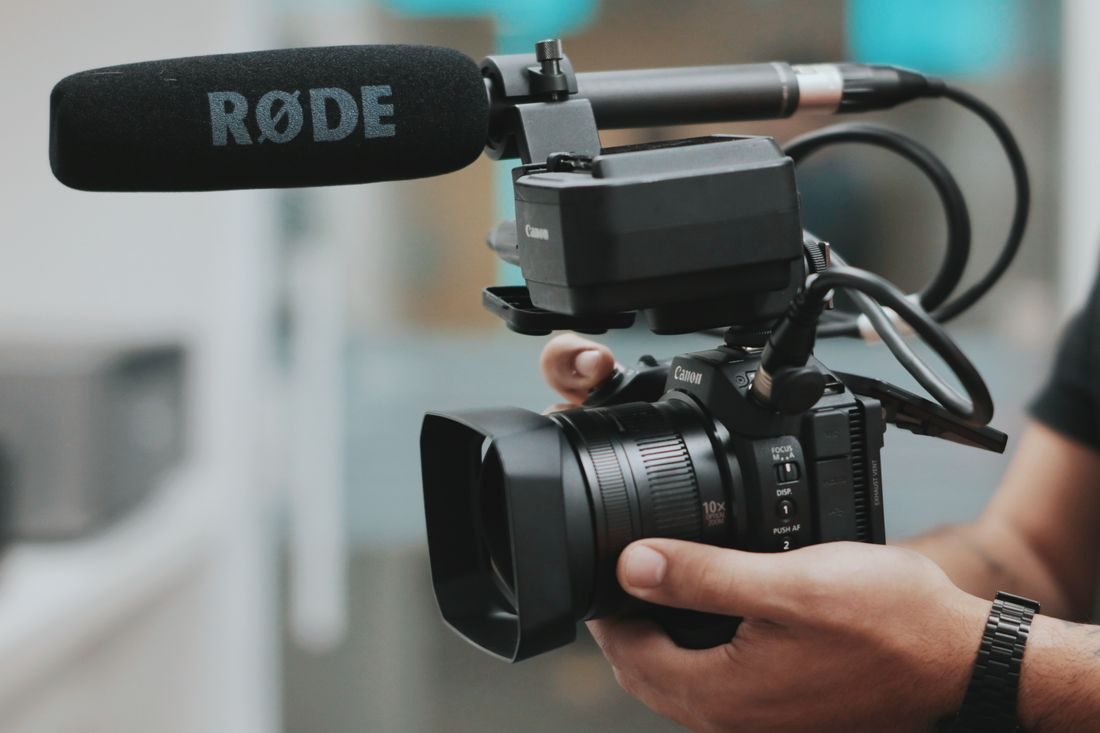
Secure the tripod and check its locks after changing height. Confirm the microphone and lights still work with the final position. A camera move can change the composition without moving the person's face any closer to the light or microphone.
When the height feels settled, make a reference photograph of the arrangement and note the eyeline. This helps maintain continuity if you need another answer later. A comfortable interview position should leave the speaker thinking about the conversation, with enough framing tolerance for an ordinary human response.