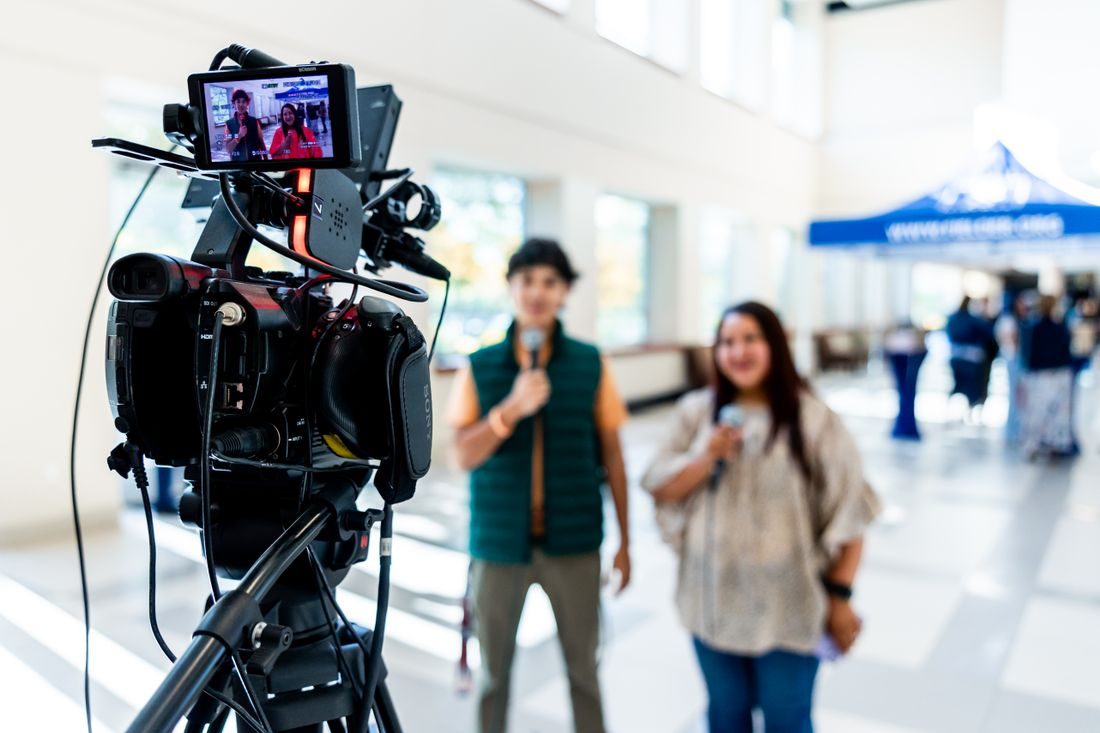
One camera can record a useful two-person conversation when the setup makes both people easy to see and hear. The main difficulty is coverage: you cannot simultaneously obtain independent close views and a wide view from a single recording position. Decide which shared composition can carry the conversation before relying on later editing to create variety.
Make the shared view do the essential work
Seat the speakers so both faces remain visible as they look towards one another. A slight angle towards the camera can be easier to read than two profiles facing directly across a table. Keep enough space around each person for gestures and natural changes in posture.
Test the widest gesture and the most relaxed sitting position. Check that one person does not block the other, particularly if the camera is off to one side. Choose a background and distance that suit both people rather than lighting or framing one as an afterthought.
Treat two voices as two recording positions
Record a sample exchange before the interview. Have each person speak at their expected volume, including a quieter answer and a more animated response. Listen for differences in clarity rather than checking only that both voices reach the recording meter.
If you use separate microphones, confirm their routing and keep track of which recording belongs to each speaker. With one microphone, place it according to its pickup pattern and intended use, then judge the compromise carefully. A visually neat central position is not automatically the clearest sound arrangement.
Keep the camera running through the exchange
A conversation becomes difficult to follow when the camera repeatedly changes framing during a sentence. Let the shared shot hold complete thoughts. If you need to adjust a setting, pause the interview clearly instead of quietly losing part of an answer.
When someone gives an important answer, leave a moment afterwards before asking the next question. That breathing space makes trimming easier. Avoid talking over the answer merely to signal agreement if the overlap will obscure a useful phrase.
Collect additional views without inventing the moment
After a section, record relevant details such as an object discussed or a demonstration of the process. These can support an edit without pretending to be a reaction captured during a particular statement. Make sure any later demonstration still represents what the speakers described.
Do not assemble unrelated nods into a false impression of agreement. If a closer explanation is needed, ask for a clearly identified follow-up or a short additional answer. Preserve the meaning and order that make the conversation understandable.
Review the first few minutes while both speakers are still available, especially the sound from each person. A consistent shared picture is a workable foundation. Additional views should help the viewer understand the subject while the original exchange remains the source of what the interview actually communicates.