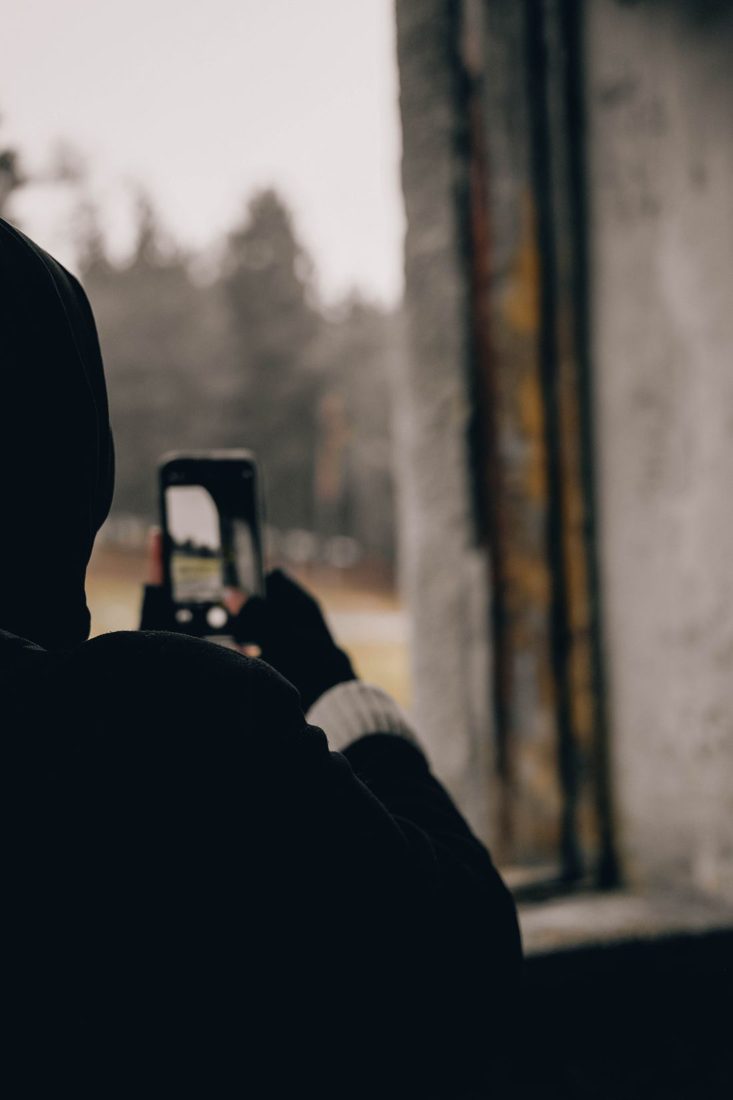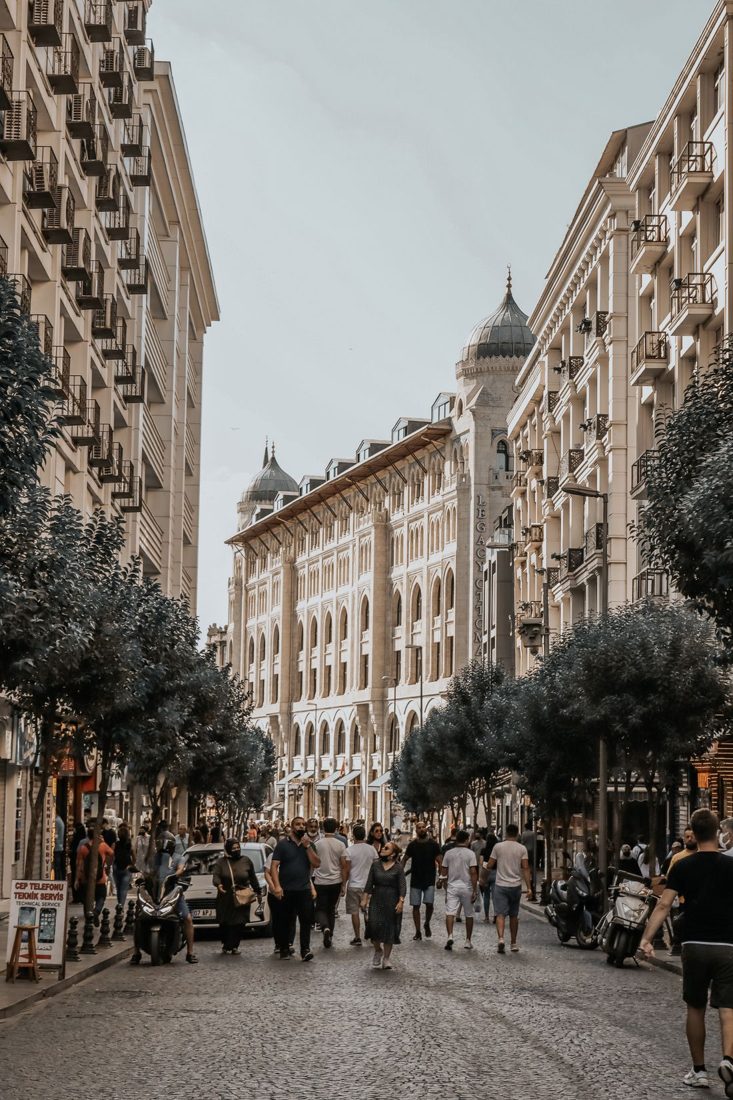
A busy street contains more possible subjects than one photograph can comfortably explain. Signs, people, vehicles and reflections can all demand attention at once. Rather than making the camera solve the entire scene, choose one relationship to photograph: a person against a wall, a repeated shape or a moment at a doorway. Then organise the frame around that choice.
Select the background before the moment
Find a position with a useful background and a safe place to stand. A plain wall, a repeated row of windows or a clear patch of light can give a moving subject room to register. Check the edges for bright signs and partial vehicles. If your intended person would merge into the background, move before waiting. The right location reduces the number of competing details without requiring an artificially empty street.
Use overlapping shapes deliberately
Watch where heads, poles and signs meet. A small sideways movement can separate a person from a lamppost or reveal the outline of a bicycle. Look beyond the nearest subject to the layers behind it.
You do not have to remove every overlap. In a crowded scene, some overlap explains the activity. The useful distinction is whether it makes the main action easier or harder to understand. Keep important gestures and faces from being lost behind unrelated objects when those details carry the picture.
Wait for one helpful change
Instead of taking continuous frames while everything competes, identify a change that would clarify the image. Perhaps a pedestrian needs to enter a gap, a car needs to pass or a doorway needs to become visible. Wait where you are permitted to stand without blocking others. Remain aware of traffic and people around you. Respect requests and venue rules, and avoid pursuing someone who clearly does not want to be photographed.
Make the crop serve the subject
A tighter crop can remove distractions, but it may also erase the context that makes a street scene interesting. Compare the subject’s size with its surroundings and keep enough information to explain the setting. In editing, inspect all four edges again and make a restrained crop on a copy. Do not rely on removing large numbers of people afterwards to create an impression of the scene that never existed. Choose a clearer moment at capture when possible.
A simple street photograph still belongs to a busy place. Give it one main subject, arrange the background and wait for a relationship that reads clearly. When the important gesture or shape is easy to find, the remaining street detail can provide context rather than distraction.