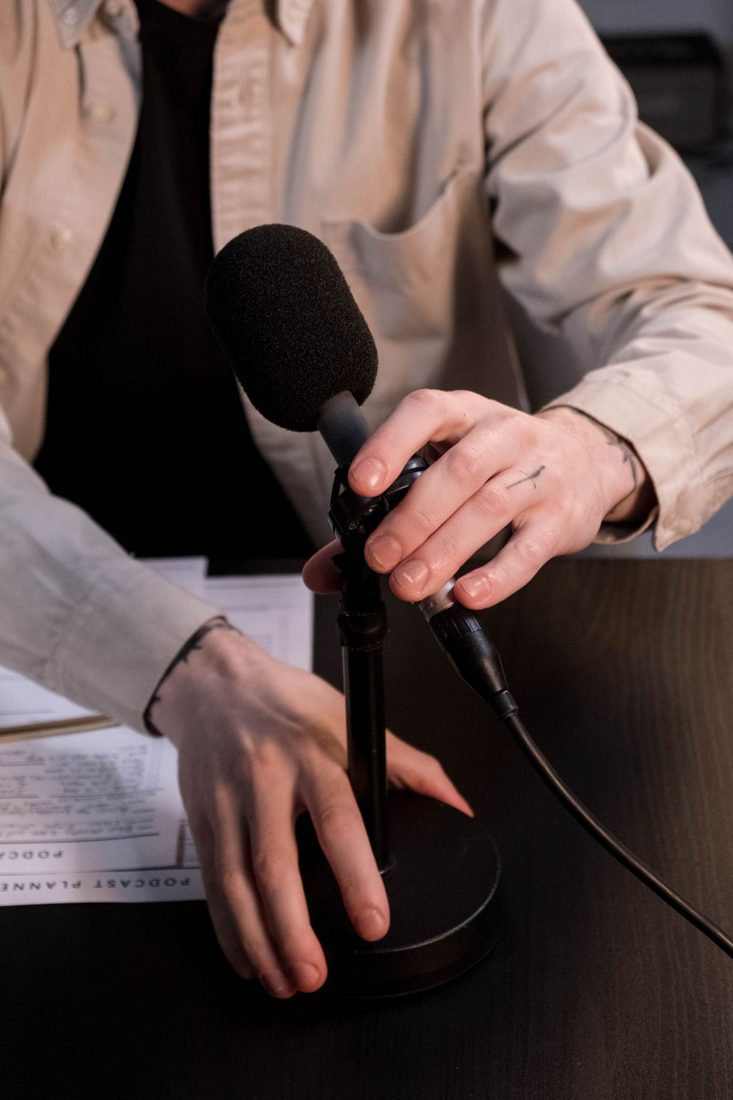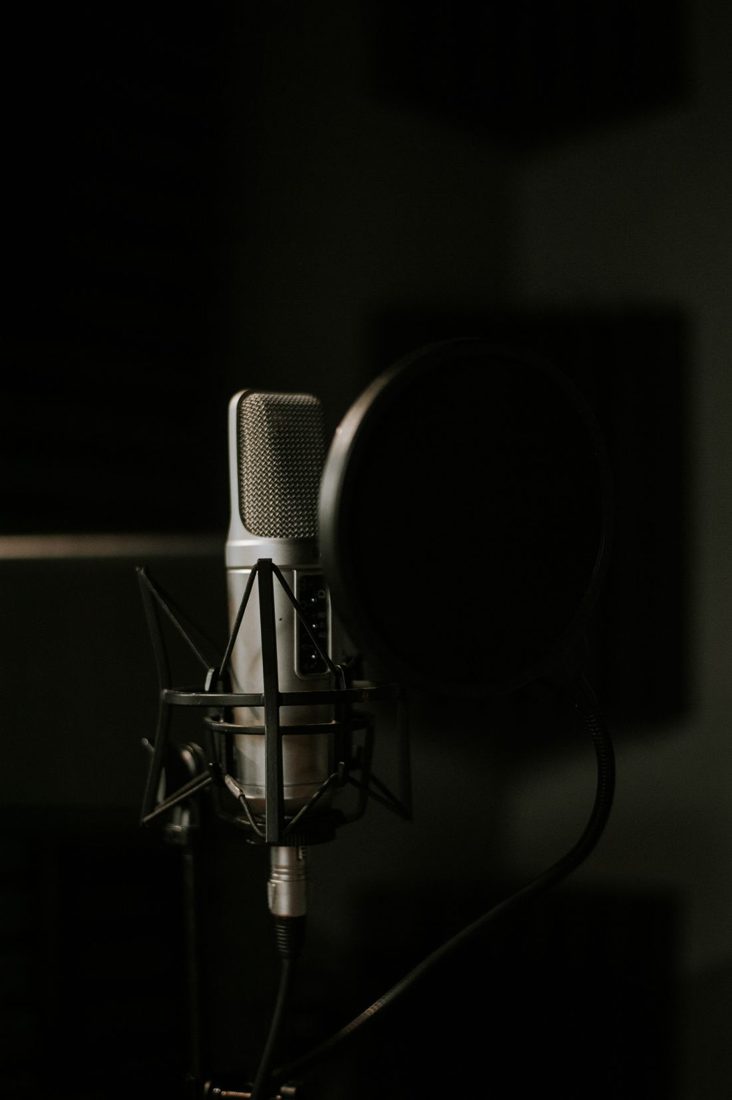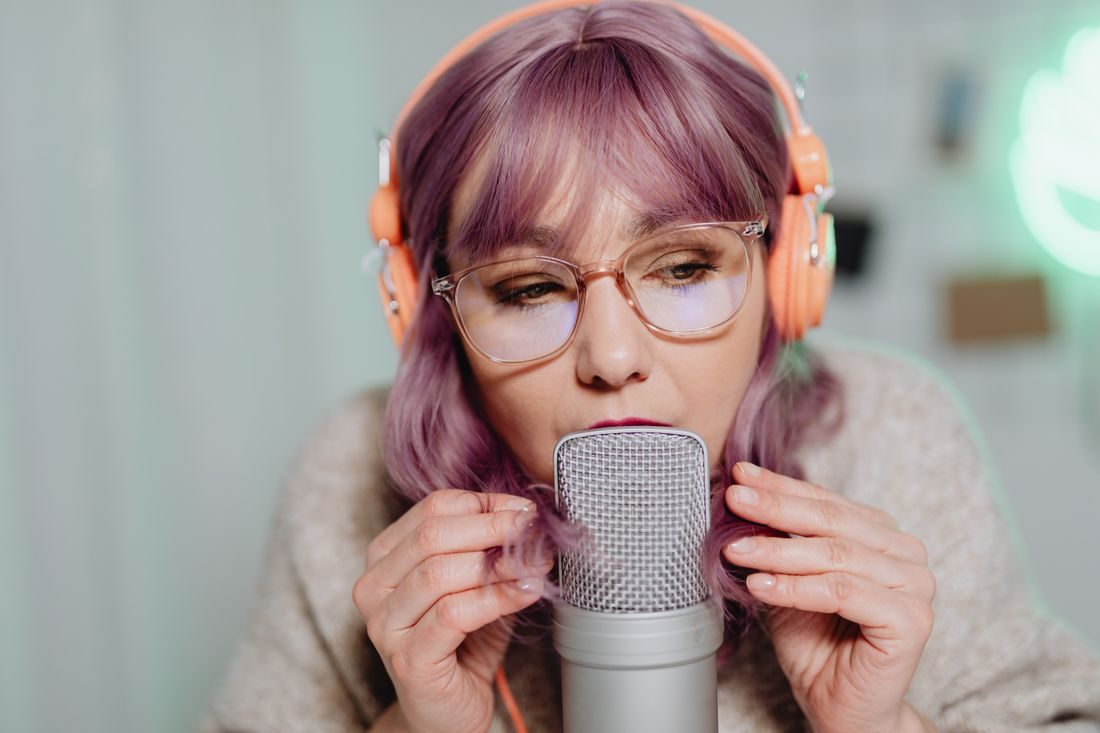
A voice can become louder, quieter or noticeably different in tone when the speaker moves toward and away from a microphone. Editing those variations is possible, but a consistent position makes the recording easier to use. Build a comfortable arrangement around the person’s normal delivery so staying in place does not require constant reminders or an awkward posture.
Find a position the speaker can maintain
Set the chair, microphone and script before recording a long passage. Put the text where the person can see it without repeatedly turning away. If they stand, allow a natural stance and check that the microphone support does not obstruct gestures. Follow the microphone’s guidance for address direction and a starting distance. Shure notes that distance affects the balance between the direct voice and room ambience, so it is worth establishing deliberately.
Use a reference without creating another noise
A suitable pop filter or a visual point can help the speaker understand the working area. It should not become something they touch with their mouth or hands. Avoid relying on a physical ruler held near the microphone during a take. Explain the position briefly, then let the speaker practise.
If the person naturally moves a lot, consider a microphone arrangement intended for that movement rather than demanding complete stillness. A technique that works for a seated narration may not suit a lively demonstration or a conversation between two people.
Rehearse turns and gestures
Record a short passage that includes looking at the script, addressing the camera and using normal hand movements. Listen to whether the voice changes at those points. Move the script or adjust the setup if one repeated turn causes a clear loss of level. Do not compensate automatically by raising input gain, because the next closer phrase may become too loud. The setup should support consistent delivery before you attempt to balance every sentence electronically.
Rebuild the position after breaks
People return to a chair differently after a pause, and a microphone arm may move when someone reaches for water. Keep simple notes or a setup photograph so you can restore the arrangement. Make a short check at the beginning of the next section. In editing, preserve natural emphasis and adjust only distracting differences. A steady microphone distance does not mean every word should have identical volume or that the performance should lose its expressive range.
Consistency comes from a comfortable, repeatable working area rather than rigid instructions to stop moving. Arrange the script and microphone together, test the actual gestures and recheck after breaks. You will retain natural delivery while reducing the changes that otherwise demand repeated level and tone corrections.