Natural-looking food photography begins with food that is easy to recognise. A window provides a convenient source of light, but placement determines whether a crust, glossy sauce or bowl of soup reads clearly. Set the table before the dish is ready so you can work efficiently, especially when the food changes appearance as it cools.
Set the empty scene first
Choose a table position with manageable window light and no direct bright patch across the plate for your initial setup. Put an empty plate or bowl in place and check the background. Remove packaging, unrelated utensils and anything reflected in the dish. Turn off nearby lights if they produce a conflicting colour. Keep the table useful for serving too; you should not need to move the finished food through an elaborate arrangement of unstable props.
Choose an angle that explains the dish
A low view may show the layers of a sandwich while hiding the contents of a deep bowl. A higher view reveals the arrangement on a flat plate but can flatten a tall dessert. Make two deliberate angles and compare what each explains. Do not force every dish into an overhead composition.
Check the nearest edge of the plate. If it dominates while the food becomes small, move or reframe. A crop should emphasise the meal rather than leave the viewer wondering what is in the bowl.
Let the window reveal texture
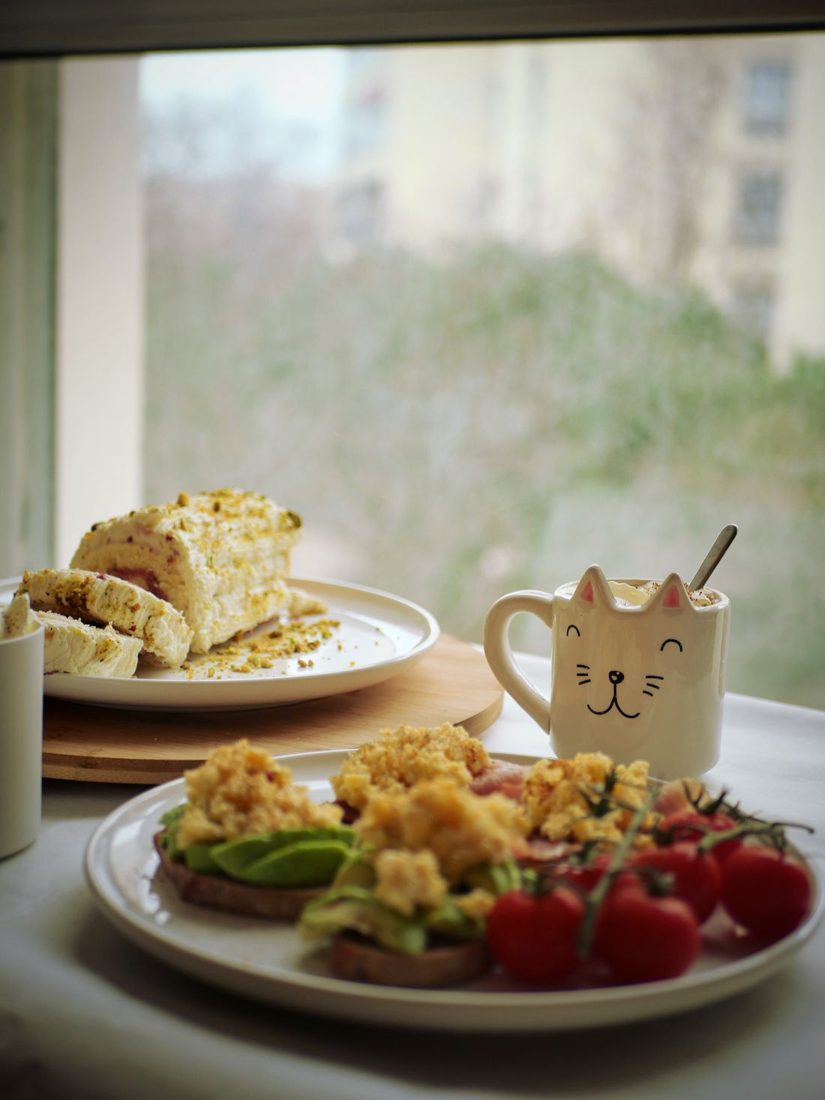
Try placing the window to one side and watch how the light describes the food. If the shaded side loses useful detail, bring a clean white card closer outside the frame. Move it gradually; the aim is readable texture, not removing every shadow. Glossy sauces and cutlery may reflect the window strongly. Adjust their angle before lowering the exposure of the whole picture and making the rest of the meal unnecessarily dark.
Style with ingredients that belong
Use a garnish or small side ingredient only when it is genuinely part of the dish or an accurate serving suggestion. A fork can suggest scale; several unrelated bowls usually add work without explaining the food. Wipe accidental smears from the plate rim where appropriate, but retain an honest appearance. Focus on the defining ingredient and check the saved image for blur. Work in short comparisons so the food remains suitable for its intended use.
Select the frame that tells the clearest story about the meal: its texture, ingredients and way of serving. Keep edits restrained enough that the dish remains recognisable. A simple, repeatable window setup is more useful than a collection of decorative props that only works for one photograph.