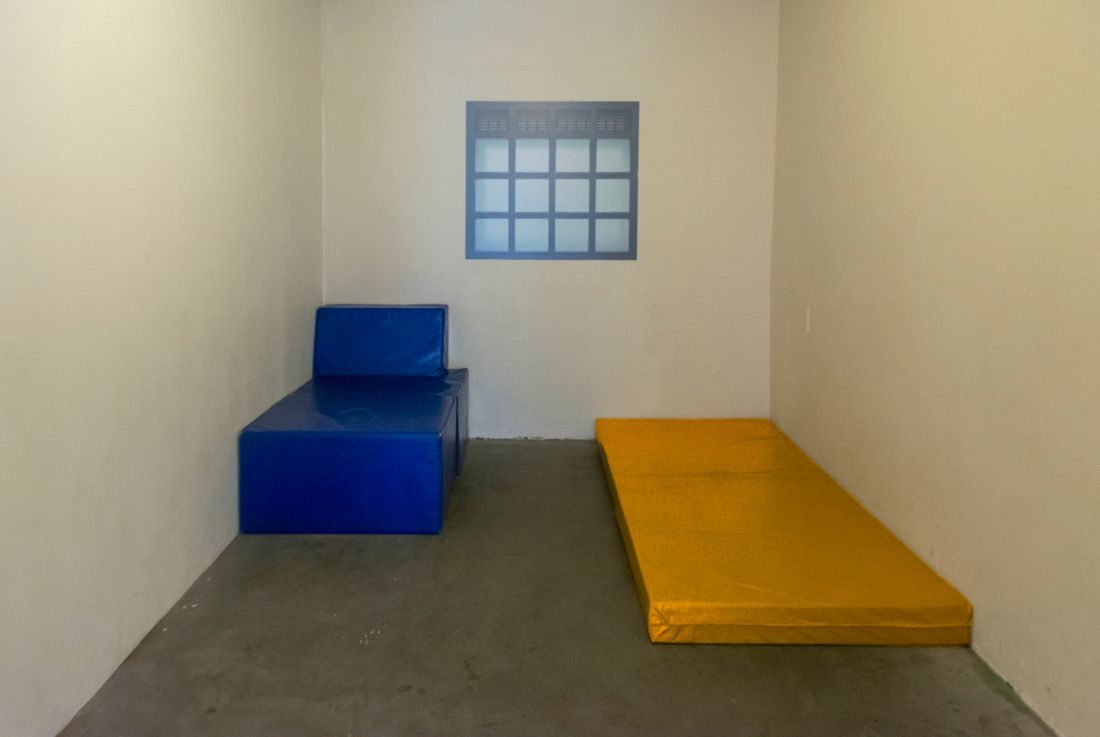
A small room can be difficult to fit into one photograph, but making it look much larger is not the same as describing it well. An extremely wide view may exaggerate furniture near the edges or stretch the route through the room. Start with the layout you want the viewer to understand, and let that guide a small, coherent set of images.
Show the room’s real relationships
Identify the main connections: bed to doorway, desk to window or seating to storage. Choose a viewpoint that makes those relationships visible rather than simply showing the greatest possible amount of floor. Keep everyday fixed items in place. Tidying loose clutter is helpful, but removing furniture that defines how the room works can give an incomplete impression. If dimensions matter, provide actual measurements separately; a photograph is not a reliable substitute for a floor plan.
Avoid placing important objects at extreme edges
Try a slightly narrower camera view and step back where the room genuinely allows it. Watch furniture near the corners of the frame, especially chairs, beds and doors. If they appear unusually stretched, change your position or composition.
A doorway can provide a useful viewpoint without pretending the camera was inside a larger space. Make clear what part of the room is visible. Do not lean equipment through an unsafe window or balance on furniture to obtain an impressive-looking angle.
Keep the camera orientation understandable
Use level guides where available and compare vertical doorframes. A strongly tilted camera may create a dramatic image but can make room geometry harder to judge. Leave enough room for modest perspective correction without cropping away useful boundaries. Avoid using correction to widen one section of the room selectively. If a wall or alcove is hidden, show it in another photograph rather than manipulating the first image into an impossible view.
Make a short complementary set
Choose an overall view, a reverse view if it adds new layout information and a detail of an important feature. Keep light and colour reasonably consistent across them. Check that mirrors are not accidentally making the space look like an adjoining room. Before sharing, ask whether someone who has not visited could identify the door, window and main furniture. If not, replace a decorative close-up with a more informative angle.
An honest interior photograph makes a small room understandable rather than pretending it has no limits. Keep proportions believable and use additional views when one frame cannot explain the layout. Clear photographs alongside dimensions give viewers a more useful picture than an exaggerated single wide-angle image.