A spoken recording may include long searches for words, restarts and useful pauses. They can look similar on a timeline, but they serve different purposes. Listen to the passage before cutting the gaps. Your goal is to help the audience follow the idea, not to remove every moment in which the speaker is not producing a word.
Separate delay from emphasis
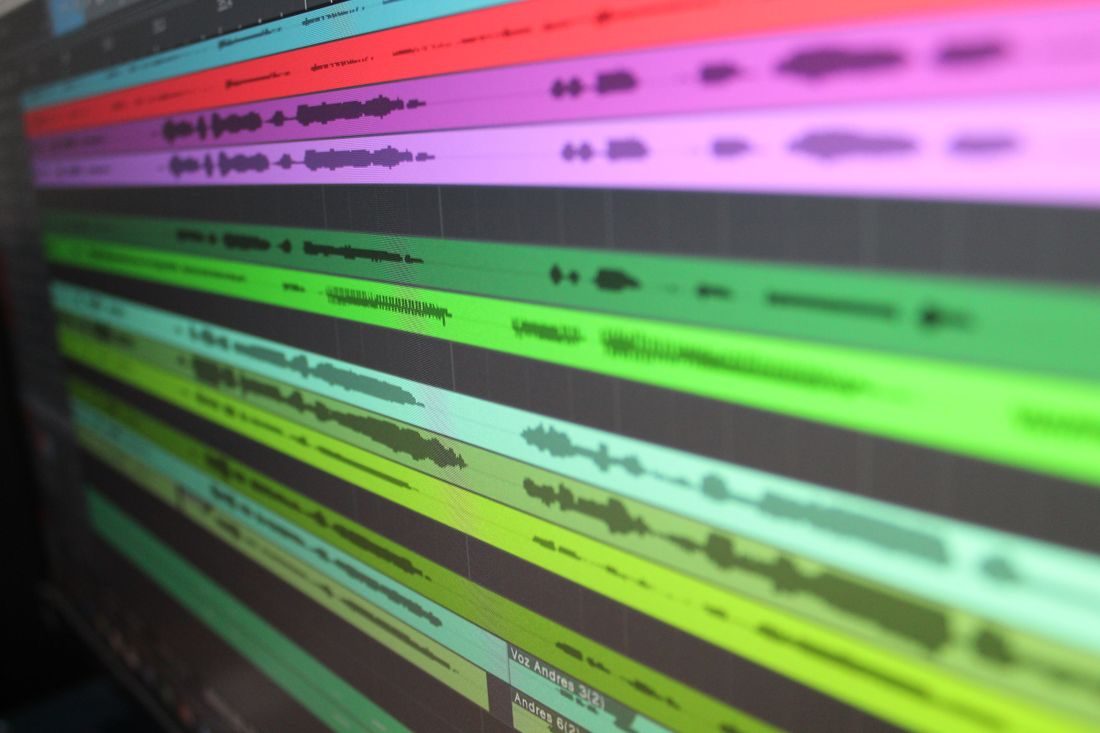
Mark places where attention drops because the speaker is looking for a line or restarting a sentence. Also notice pauses that introduce a contrast, let a difficult point settle or separate two ideas. Keep those functions even if you shorten their duration. A waveform can show where sound occurs, but it cannot tell you whether a silence is expressive. Use the words and surrounding delivery to make that decision.
Trim in the context of a full phrase
Move the edit boundaries so consonants and breaths remain complete. Listen from before the cut through the next sentence rather than repeatedly playing only the join. Avoid joining two words so tightly that they sound like a new word or a rushed correction.
For a long delay, keep a modest natural gap instead of automatically closing it completely. If the speaker inhaled before the next phrase, decide how that breath belongs to the timing. Removing all inhalations can make a long explanation sound disconnected and tiring.
Maintain the background between words
A hard drop to silence can make even a sensible timing edit obvious. Use appropriate material from the same recording or matching room tone when a gap needs background continuity. Apply suitable small fades and listen for clicks or an abrupt change in ambience. Do not paste an obviously repeating noise into every pause. Keep the original and make edits in a reversible workflow so you can restore timing when the passage begins to feel unnatural.
Review without studying the cuts
Play a substantial section with your attention on the explanation. Can you understand where one idea ends and another begins? Does the voice have room for emphasis, or does it sound relentless? Compare with a less tightly edited version when unsure. If a strict duration is difficult to meet, remove a secondary idea rather than shortening every gap. An explanation with fewer complete points can be more useful than a crowded one that demands constant concentration.
Good pause editing improves the path through an idea while retaining human rhythm. Remove the delays that interrupt meaning, preserve the space that supports it and inspect every join by listening. A shorter file is not the only measure of success; the audience should find the explanation easier to follow.