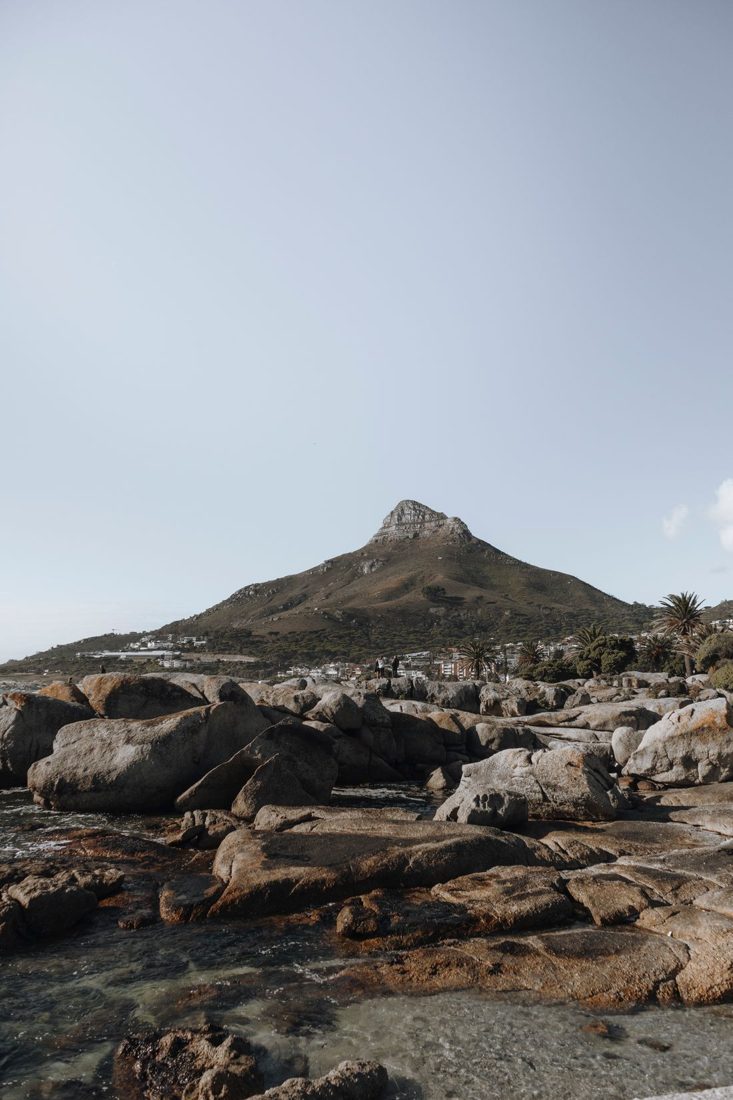
A rock, path or patch of grass can make a landscape feel more spatial, but placing something close to the camera does not automatically improve it. The foreground needs a useful relationship with the middle distance and background. Start with the landscape feature you want to show, then look for a nearby shape that helps the viewer reach it.
Choose a foreground with a job
A winding path can suggest a route through the photograph. A textured rock can establish scale and contrast with a smooth distant surface. Choose one role rather than filling the lower edge with whatever happens to be nearby. If the foreground has no visible connection to the main view, it may become a separate subject competing for attention. Compare a frame with and without it before committing to a low camera position.
Separate the layers clearly
Look for the space between the near object and distant feature. A nearby branch crossing the most important mountain peak can flatten that relationship instead of adding depth. Move sideways or raise the camera slightly to separate outlines.
Watch the frame edges too. A large partial rock may look like an accidental obstruction unless its shape is clearly deliberate. Give it enough room to read as a foreground element, or crop it more decisively. Small changes in height can transform these overlaps.
Choose where sharpness matters
Focus according to the details that need to remain readable. A very close foreground and distant background may not both look sharp with your chosen setup. On a camera with aperture control, experiment and inspect the result rather than assuming one setting suits every distance. If the foreground is decorative, some softness may be acceptable. If its texture is essential, step back or change the composition so the photograph’s depth demands are easier to manage.
Keep the main landscape visible
Review the image as a small thumbnail. Does the foreground support the scene, or has it become a huge dark block? Check that the horizon and distant subject still have enough room. Avoid moving close to fragile plants or unstable ground simply to obtain a dramatic angle. You can find a usable foreground on a safe path and make a stronger photograph by arranging its relationship carefully than by choosing the most extreme possible viewpoint.
Depth is most convincing when the foreground gives the eye somewhere useful to begin and a clear route into the distance. Keep the layers separate, make sharpness intentional and compare the image without the near object. Use the version that explains the landscape rather than merely adding more detail.